
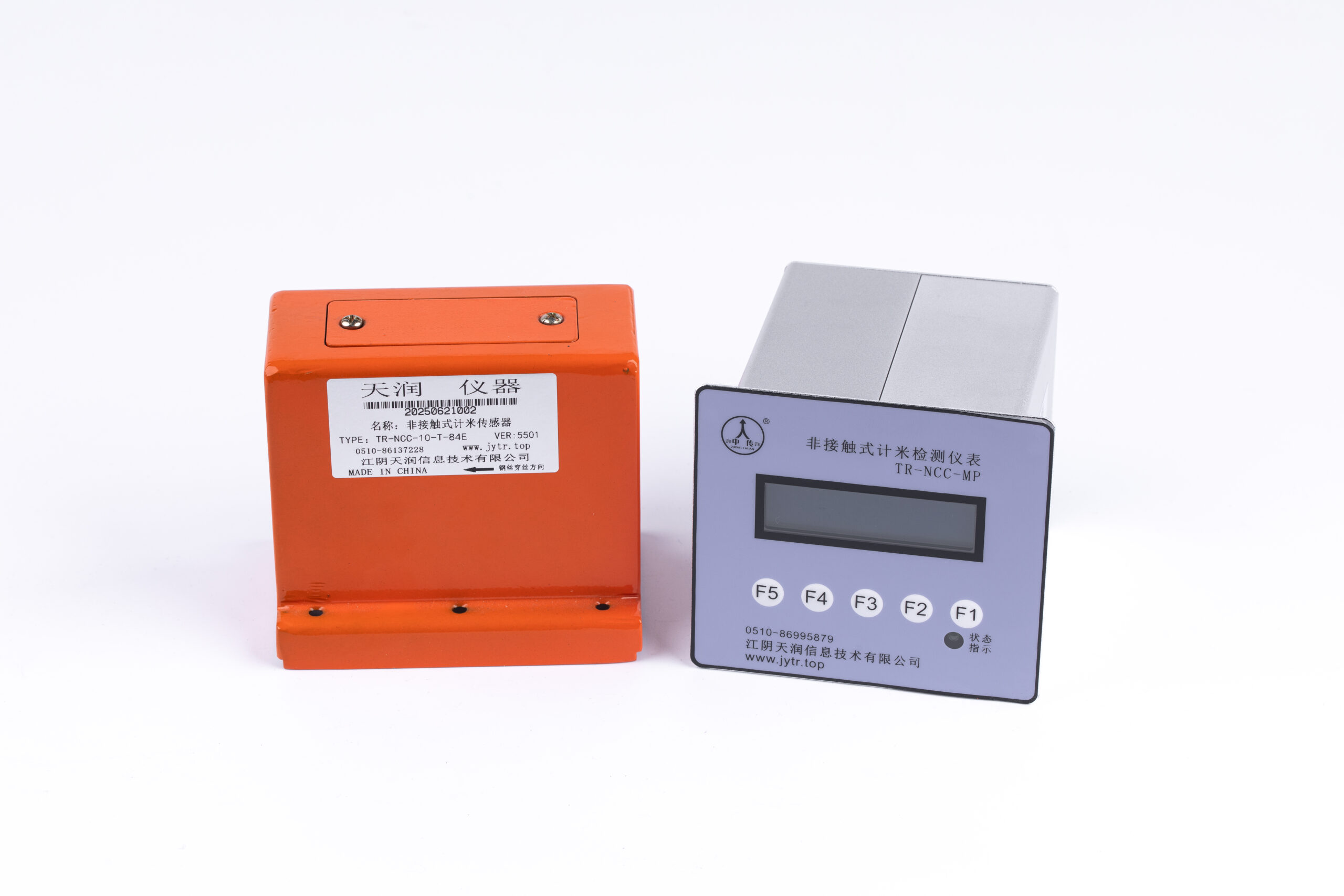
1.Principle Introduction
Based on the electromagnetic principle, it is suitable for ferromagnetic wires;The metal wire to be measured does not come into contactwith the length measurement sensor, ensuring slip-freeIt provides reliable digital length measurement with high operation and is unaffected by tension;stability and no additional maintenance costs;It is applicable to various wire speeds and specifications.
2.Meter Counting Accuracy
| Model | Precision | Normal Application Objects | Normal Application Equipments |
| Standard Version | 3‰ | Steel wire, cords, strands, ropes with vary line speeds. | Straight-line wire drawing machines, wet wire drawing machines, stranding machines, rewinding machines, etc. |
| High-precision Version | 1‰ | ||
| Ultra-High Precision Version | 0.3‰ | It could also be applied to the above-listed machines, particularly suitable for high precision required processes, such as tube stranders, double twist machines, rewinding machines, etc. |
3.Comparison of Measurement Methods
| Traditional Mechanical Meter Counting | VS | Electromagenetic Non-contact Meter |
| • Slippage Deviation • Wear Error
• Accuracy Bottleneck • Maintenance & Scenario Limitations |
♦ Non-contact Non-destructive Measurement ♦ High Precision & Stable Output
♦ Low Maintenance & High Efficiency ♦ Strong Anti-interference Capability |
4.Application Cases
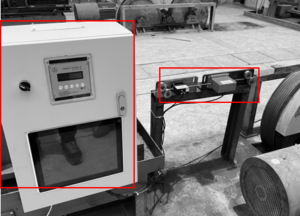
For Wire Rope |
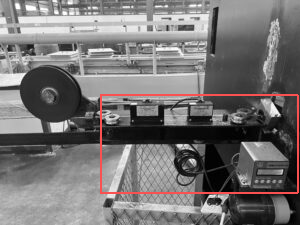
Fixed-length Production of Coated Products |
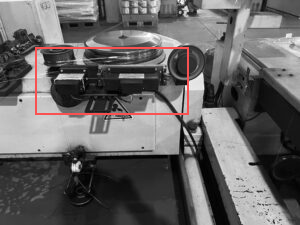
For Wet Drawing Machine |
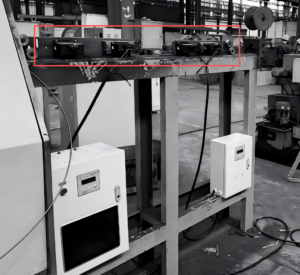
For Straight-line Drawing Machine |
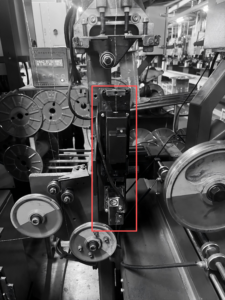
For Strander |
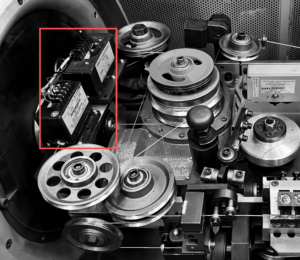
For Inner Take-up Machine |